Research on the Mood Meter and role-play for adolescent emotion regulation
What published studies show about the Mood Meter and role-play for emotion regulation in adolescents.
What published studies show about the Mood Meter and role-play for emotion regulation in adolescents.
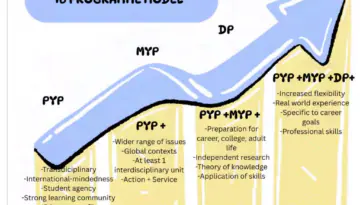
The International Baccalaureate is often described as four programmes. This IB Programme Model chart is more useful than that. It shows a rising path from the Primary Years Programme (PYP) through the Middle Years Programme (MYP) and Diploma Programme (DP) to the Career-related Programme (CP). Each stage keeps what came before and adds a new […]
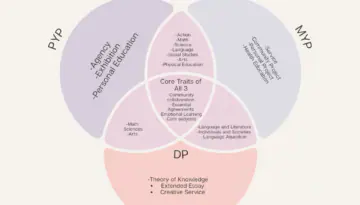
The International Baccalaureate is built as a continuum, not three disconnected programmes. The Primary Years Programme (PYP), Middle Years Programme (MYP), and Diploma Programme (DP) each have their own signature experiences, yet they rest on the same idea of the learner: a young person who inquires, collaborates, and grows in character as well as in […]
Teaching is emotionally demanding work. Beyond lesson planning and instruction, educators manage classroom dynamics, student emotions, administrative expectations, and personal stress. Social Emotional Learning (SEL) is often discussed in relation to students, but its practices are equally powerful for supporting teacher well-being. When SEL is embedded into school culture, it helps educators regulate stress, build […]
Many students experience strong emotions but lack the language to describe what they are feeling. When students cannot name their emotions, they often express them through behavior, withdrawal, frustration, avoidance, or conflict. Supporting these students is a critical part of social-emotional learning (SEL) and academic success. Emotional vocabulary is not innate; it must be taught, […]
Student motivation is often misunderstood as something teachers must constantly create through rewards, consequences, or external pressure. In reality, long-lasting motivation grows from within. Social Emotional Learning (SEL) provides the foundation students need to develop internal drive, persistence, and ownership of their learning. When students understand their emotions, manage challenges, and feel connected and capable, […]
Emotionally intelligent classrooms go beyond academic instruction to intentionally support students’ emotional growth. In these environments, emotions are recognized as part of learning rather than distractions from it. Teachers and students work together to create spaces where emotional awareness, respect, and responsibility guide behavior and interaction. While each classroom is unique, emotionally intelligent classrooms share […]
Emotional safety is a foundational element of effective learning environments. When students feel emotionally safe, they are more willing to participate, take academic risks, ask questions, and express their thoughts. Without emotional safety, learning becomes limited by fear, anxiety, or disengagement. Building emotional safety in learning environments supports not only academic success but also emotional […]
Classroom conflict is a natural part of learning environments where students bring diverse emotions, perspectives, and experiences together. However, frequent or unresolved conflict can disrupt learning, damage relationships, and create stress for both students and educators. Social and Emotional Learning (SEL) offers a proactive approach to reducing classroom conflict over time by building emotional awareness, […]
Emotional literacy is the ability to recognize, understand, label, express, and manage emotions in oneself and others. These skills form the foundation of healthy relationships, effective communication, and emotional well-being. While emotional literacy is important at every stage of life, how it is taught must be developmentally appropriate. Teaching emotional literacy in age-appropriate ways ensures […]