The Psychology Behind Mood Tracking and How It Improves Emotional Health
The Psychology Behind Mood Tracking
Mood tracking has become a powerful tool for understanding emotional well-being. Whether done through journals, digital apps, or color-coded charts, tracking your emotions helps you recognize patterns that often go unnoticed in daily life. Behind this seemingly simple practice lies strong psychological science that shows how monitoring your feelings can improve emotional balance, decision-making, and overall mental clarity.
Why Mood Tracking Matters
Emotionally aware people are better equipped to handle stress, communicate clearly, and make thoughtful choices. Mood tracking supports this awareness by making emotions more visible and easier to understand. Instead of experiencing feelings without clarity, you begin to recognize what triggers certain moods, what helps you feel better, and how emotions fluctuate throughout the day.
This level of insight encourages healthier reactions, stronger relationships, and increased self-compassion.
How Mood Tracking Builds Awareness
The human mind often reacts automatically to emotions based on past experiences, habits, and subconscious beliefs. By tracking moods consistently, you interrupt this automatic cycle. Recording how you feel brings emotions into conscious awareness, turning something vague into something you can observe, reflect on, and understand.
Over time, this awareness helps you notice patterns: certain people may energize you, specific tasks may cause stress, or particular environments may make you feel calm or anxious.
The Psychological Science Behind It
Mood tracking works because it strengthens metacognition, the ability to think about your own thoughts and feelings. Psychologists consider metacognition a key skill for emotional intelligence. When you track your emotions, you are actively observing your internal state rather than reacting automatically.
This observation activates the brain’s prefrontal cortex, responsible for decision-making and emotional regulation. As a result, you gain more control over your reactions and learn to choose healthier responses even during stressful moments.
Mood tracking also improves self-regulation. By seeing your emotions documented over time, you become more aware of patterns like burnout, overwhelm, or emotional highs and lows. This awareness allows you to change habits, adjust routines, and approach daily challenges more mindfully.
Benefits of Consistent Mood Tracking
Daily mood tracking offers several powerful benefits:
1. Emotional Awareness
You become more in tune with how you feel and why you feel that way.
2. Better Decision-Making
Understanding your emotional state helps you make choices that align with your well-being.
3. Stress Reduction
Identifying stress triggers early prevents emotions from building up.
4. Healthier Relationships
When you understand your emotional patterns, you communicate more clearly and react more calmly.
5. Personal Growth
Long-term mood tracking reveals habits and emotional cycles that you can intentionally transform.
The psychology behind mood tracking is grounded in awareness, reflection, and emotional growth. By observing your emotions regularly, you build a deeper understanding of yourself and develop stronger control over how you respond to challenges. Tools like the Mood Meter make this process even easier—turning complex emotions into clear patterns that support healthier choices and a more balanced life.
The Mood Meter: A Simple Tool for Emotional Clarity
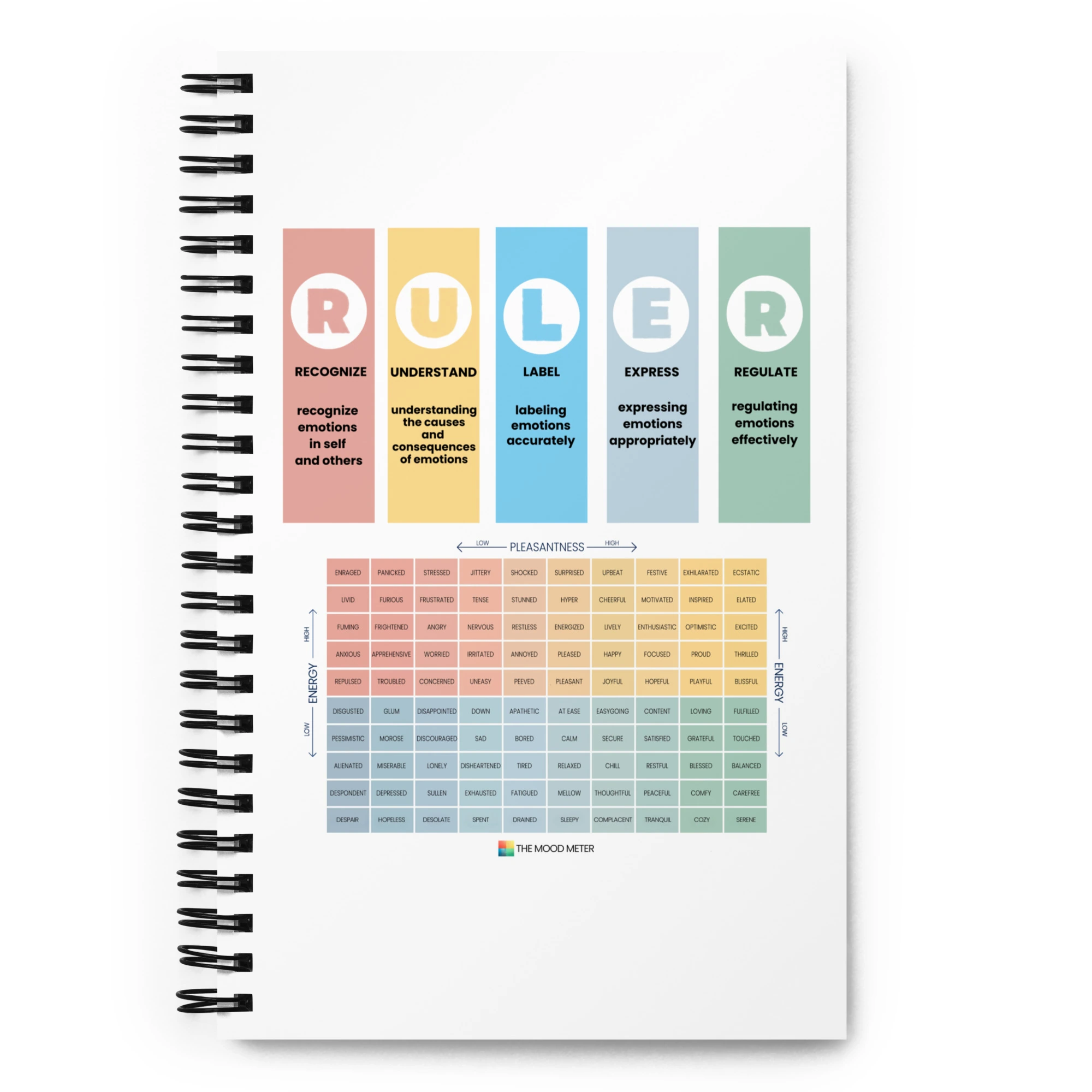
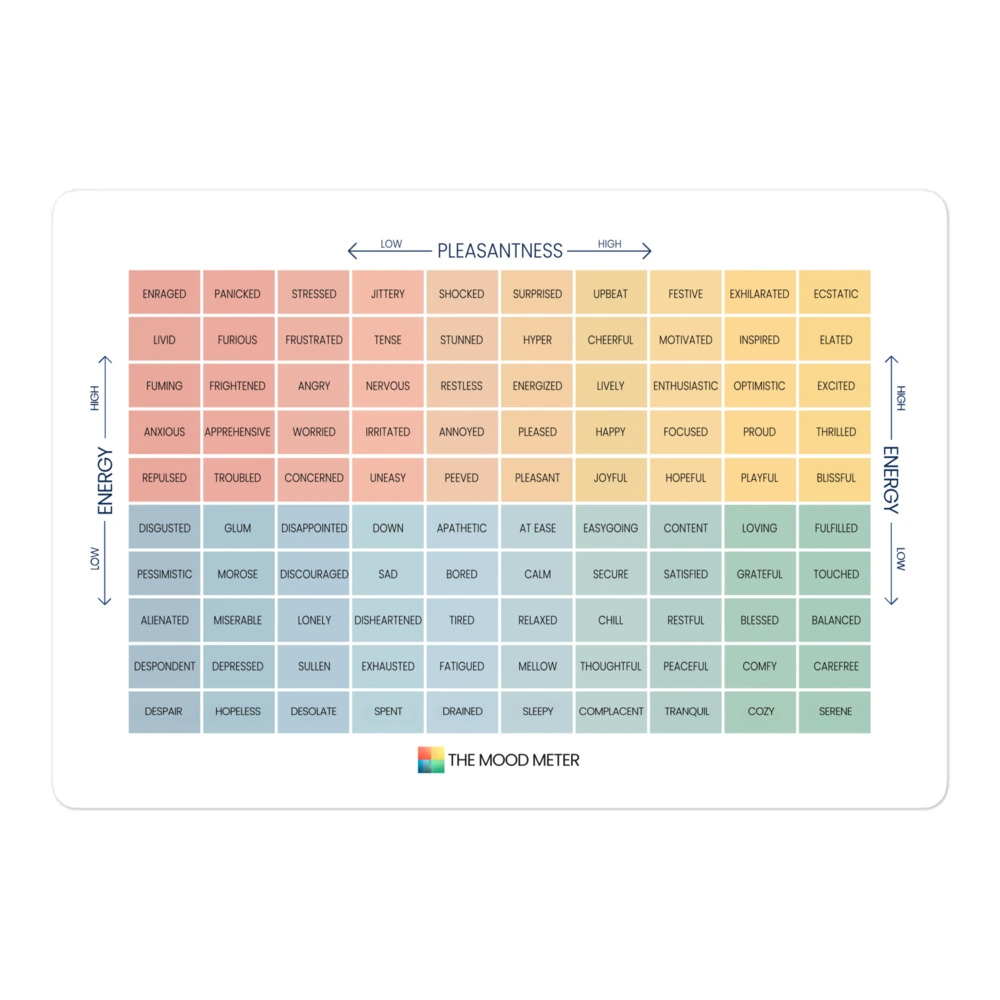
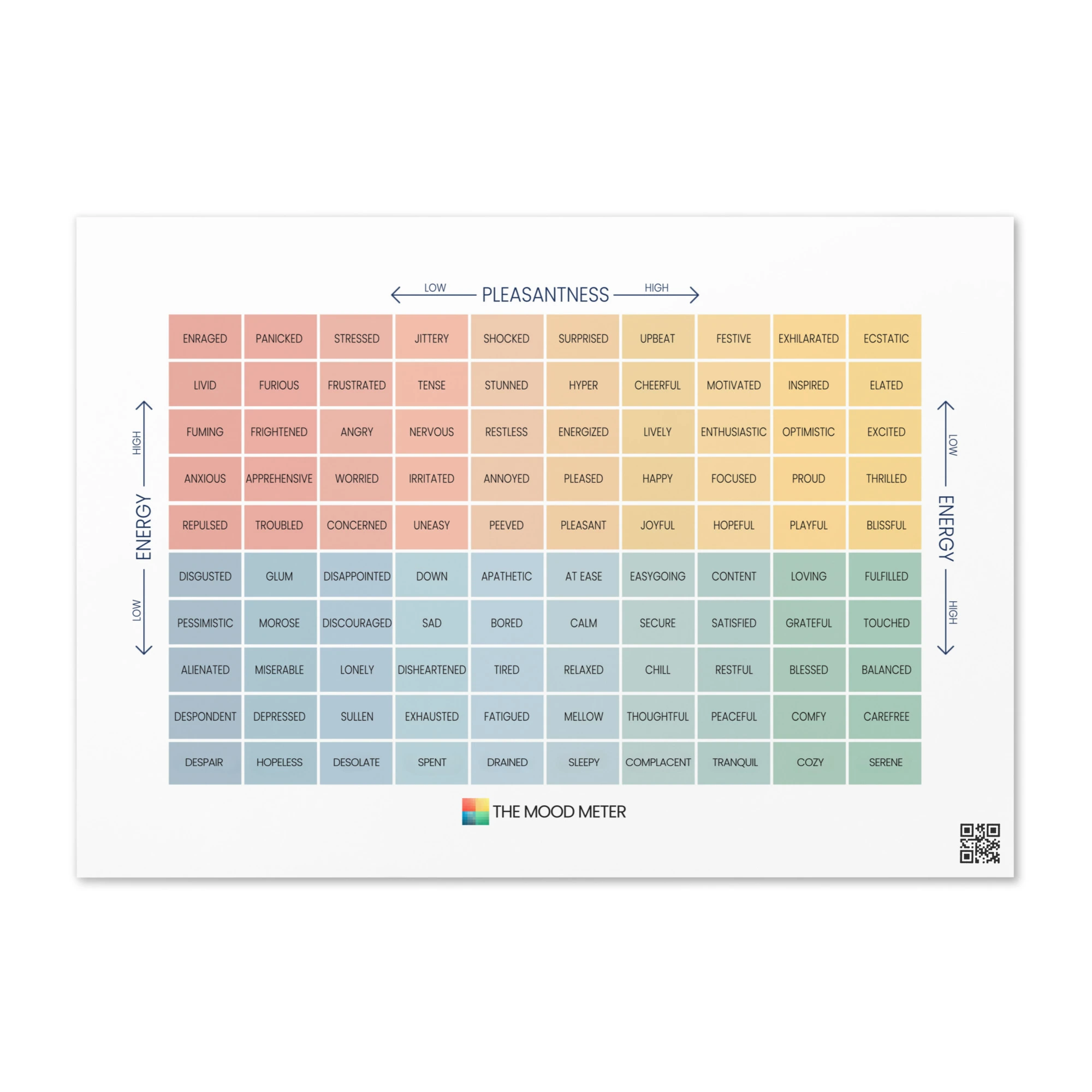
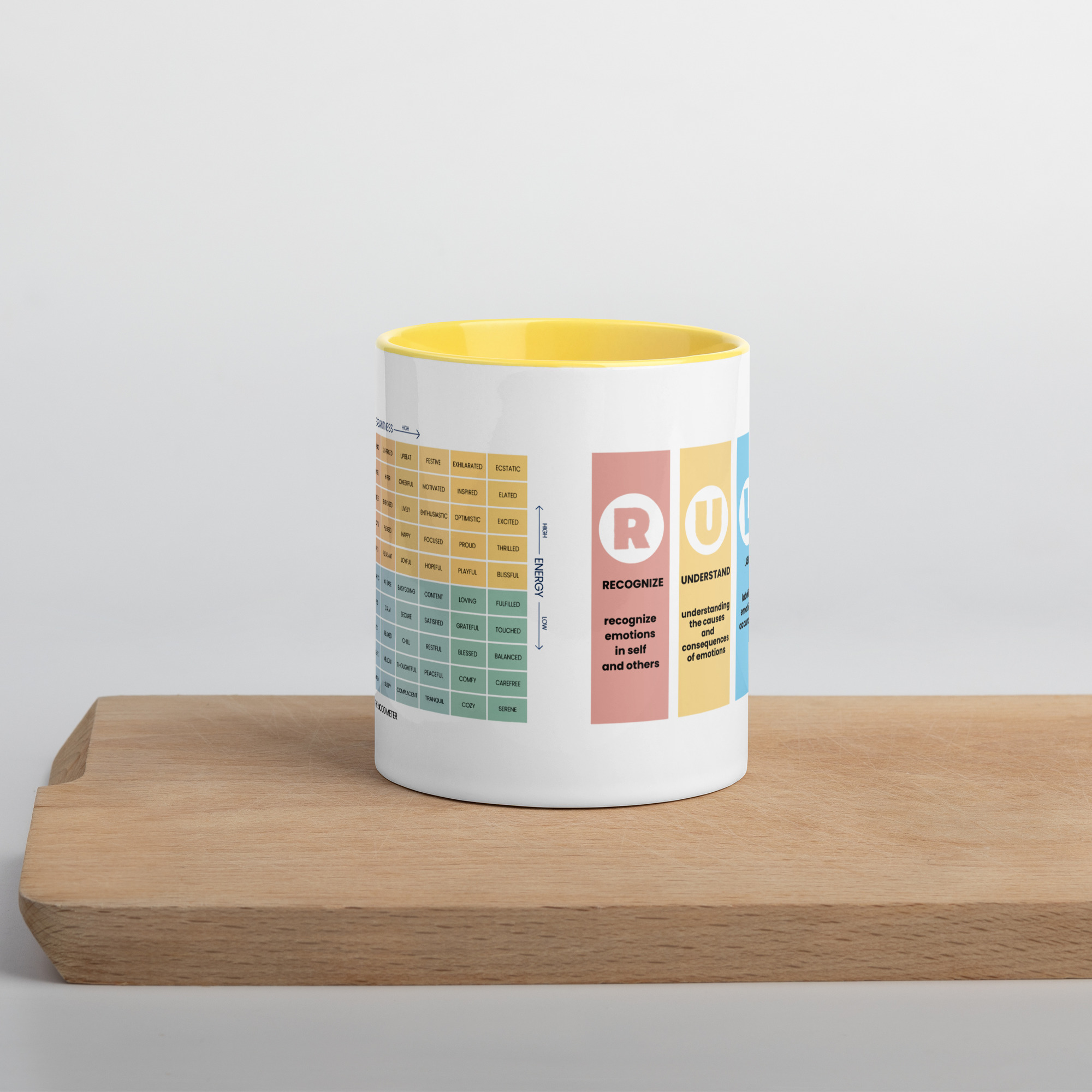
The Mood Meter, created by the Yale Center for Emotional Intelligence, is one of the most effective tools for mood tracking. It organizes emotions into four color zones based on two qualities: energy level (high or low) and pleasantness (positive or negative). You can learn more about how the Mood Meter works to better understand how each zone represents a wide range of feelings, from calm and focused to frustrated, excited, or drained.
When you check in on the Mood Meter, you select the color and emotion that best match how you feel. This simple act helps you identify where your emotions fall and what might be influencing them.
Over time, consistent check-ins reveal emotional patterns: what situations move you into the red zone, what brings you to calmness, or what shifts your feelings unexpectedly. This makes emotional triggers easier to spot and emotional regulation much more achievable.
-
-

The Mood Meter & RULER White Glossy Ceramic Mug
Price range: $11.00 through $14.50 -
-
Bubble-Free Stickers – Durable High-Opacity Vinyl for Smooth Application
Price range: $7.50 through $11.00 -

-
The Mood Meter Greeting Card – Premium Paperboard with Envelope
Price range: $7.50 through $9.00