Understanding the Yale Center for Emotional Intelligence & the Mood Meter
Yale Center for Emotional Intelligence
Every emotion we experience has value, and knowing how to use them wisely is at the heart of the Yale Center for Emotional Intelligence (YCEI). Based at the Yale School of Medicine’s Child Study Center, YCEI conducts rigorous research and offers training that supports learners, educators, families, and workplaces in building emotional-intelligence skills. Their mission is simple yet profound: “emotions matter.”
Mission & Approach
YCEI believes that the well-being of individuals and communities depends on our ability to recognise, understand, label, express, and regulate emotions, which they call the RULER approach. Their work weaves together research in education, psychology, policy, and technology, with funding from foundations, federal grants, corporate support, and philanthropy.
They support schools and organisations by helping them:
Understand the value of emotions and how emotional climates shape learning, relationships, and innovation.
Teach emotion-skills systemically, so not just one class, but entire school communities (students, teachers, staff, families).
Build and sustain positive emotional climates in homes, classrooms, and workplaces.
Research & Impact
YCEI researchers are actively engaged in “translational emotion science,” which means taking lab and theory findings into real-world tools and environments. They’ve evaluated programmes that foster emotional-skill development, measured outcomes such as academic performance, school climate, well-being, and relationships, and required feedback loops for continuous improvement.
One of their signature programmes is the widely adopted RULER curriculum for PreK–12 schools. It helps educational communities focus on emotions not as distractions, but as data and resources.
The Mood Meter — How It Works
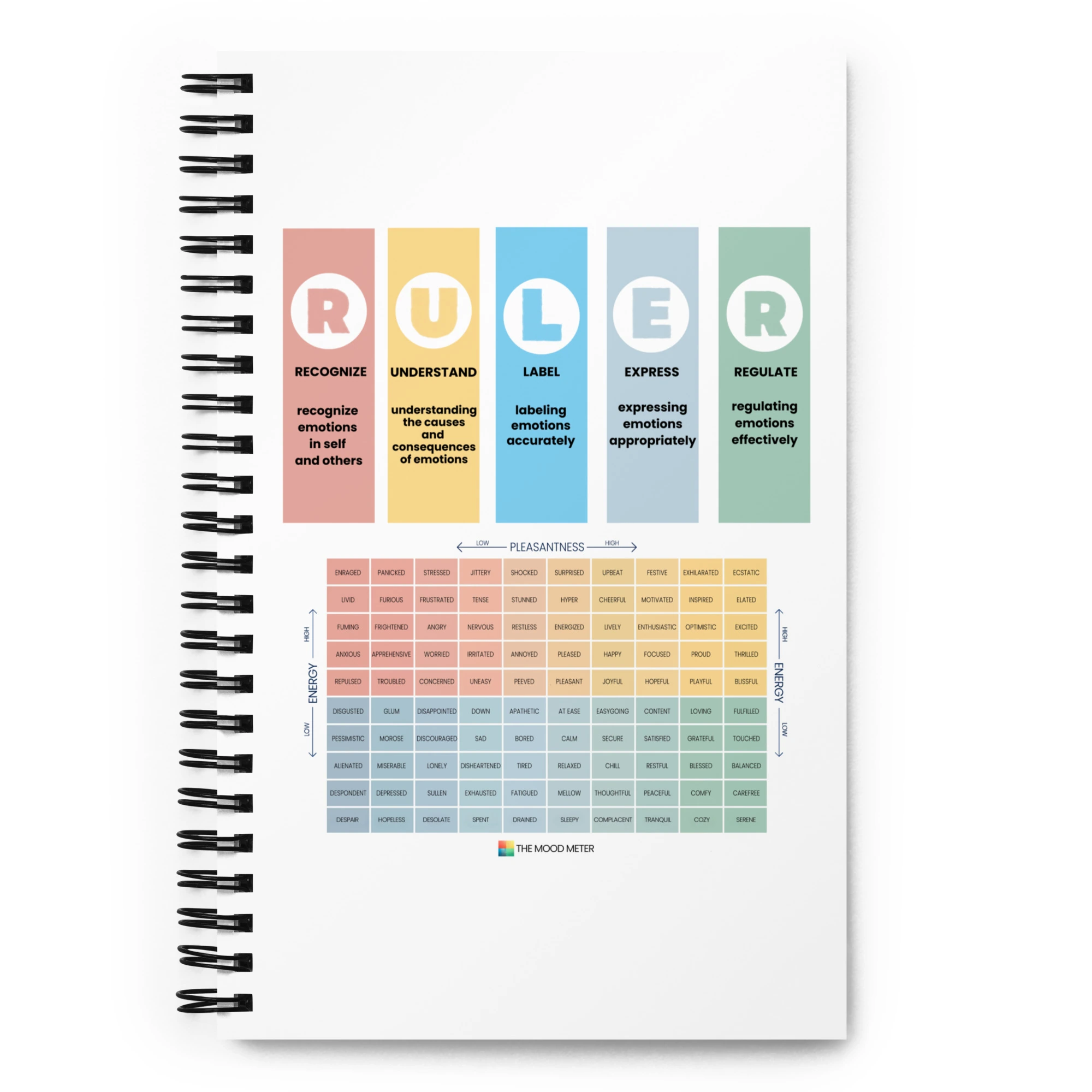
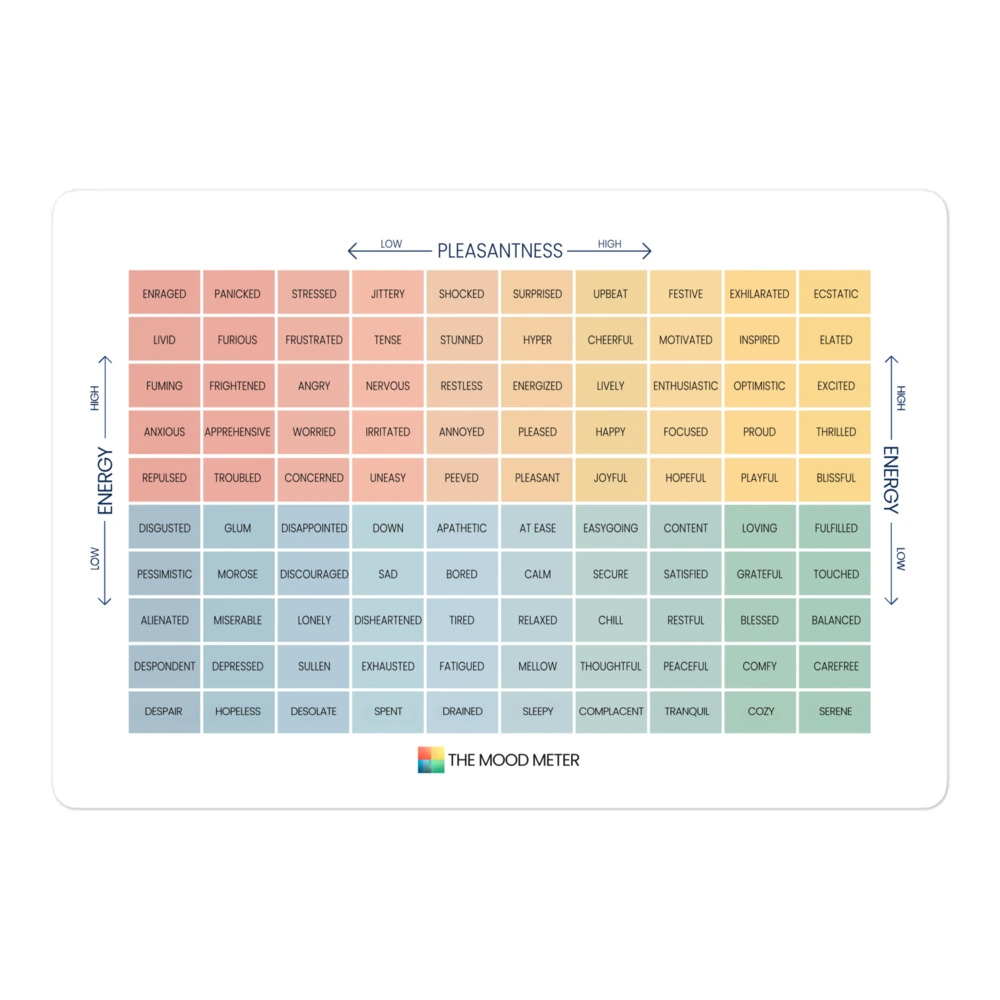
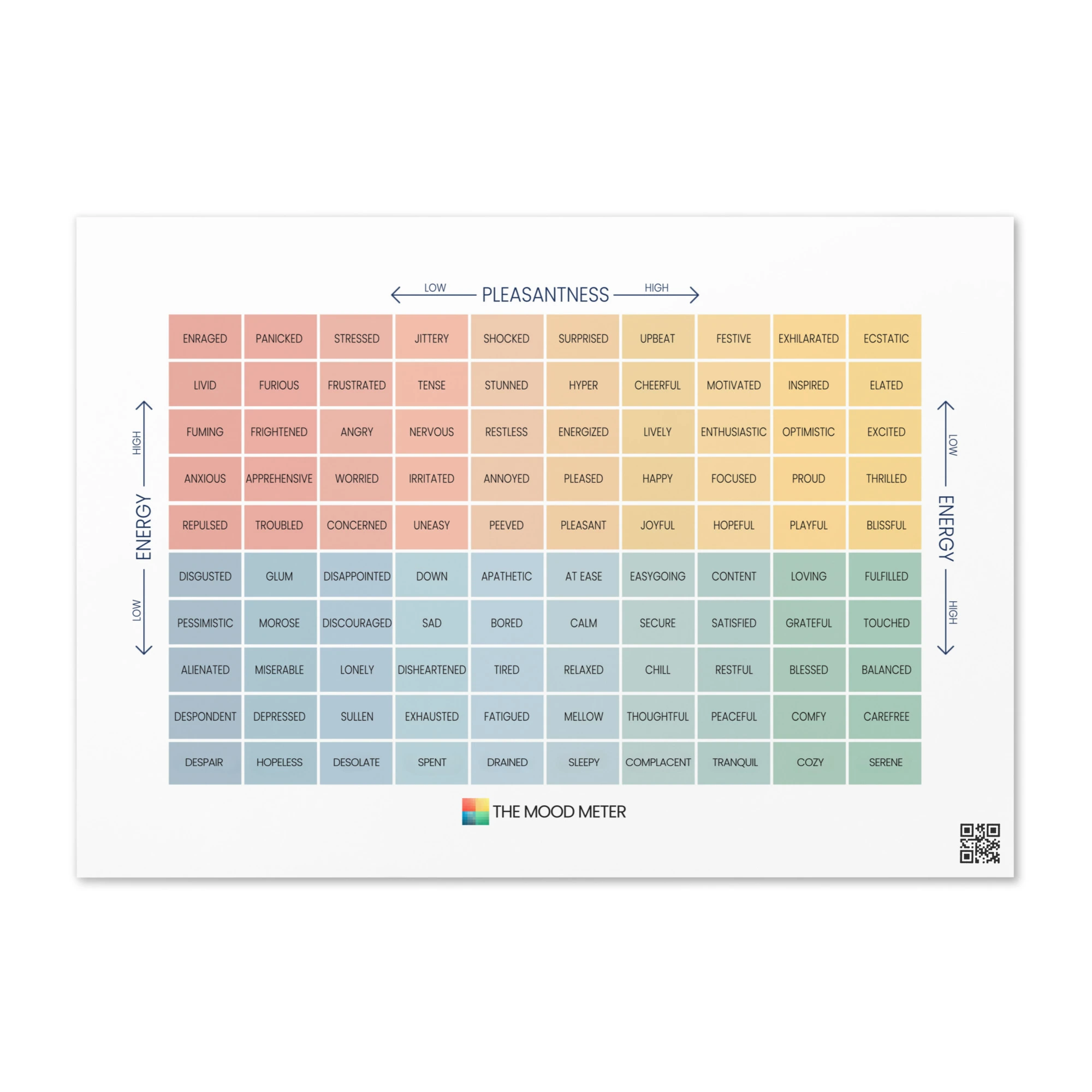
Central to the RULER framework is the tool called the Mood Meter. This visual instrument guides individuals to check in with their emotions by mapping them on two dimensions: energy (high to low) and pleasantness (pleasant to unpleasant).
The Mood Meter divides feelings into four colour-coded quadrants:
Red: high energy, unpleasant (e.g., anxious, frustrated). understand these emotions in the Red Quadrant of the Mood Meter.
Blue: low energy, unpleasant (e.g., sad, bored). Discover support strategies in the Blue Quadrant of the Mood Meter.
Green: low energy, pleasant (e.g., calm, content). learn more in the Green Quadrant of the Mood Meter.
Yellow: high energy, pleasant (e.g., excited, motivated). explore the Yellow Quadrant of the Mood Meter.
By identifying where they are on the Mood Meter, people increase their emotional awareness and vocabulary. From that awareness, they can explore why they feel the way they do, and then consider what to do next to stay, shift, or manage the feeling. Over time, this routine builds more emotional agility and supports healthier relationships, better focus, improved learning, and resilience.
Why This Matters
In today’s fast-paced world, emotional intelligence isn’t optional; it’s foundational. YCEI’s stance is that every individual is a feeling being, and our emotions give us information about ourselves, our values, the world around us, and the relationships we are in.
When schools, families, and workplaces adopt a language of emotions (rather than silence or avoidance), they tend to create healthier climates: better connections, less burnout, more innovation, and deeper learning. Indeed, YCEI’s research suggests that when students and staff feel valued, connected, and inspired, they engage more, behave better, and learn more.
For Schools & Communities
If you’re part of a school, district, or educational community looking to embed social-emotional learning (SEL) at scale, YCEI offers training, curricula, professional development, and evidence-based tools. Their focus is not merely on one group, but on whole systems: leadership, teachers, staff, families, and learners. The ripple effect can transform not just individual behaviour, but culture.
-
-

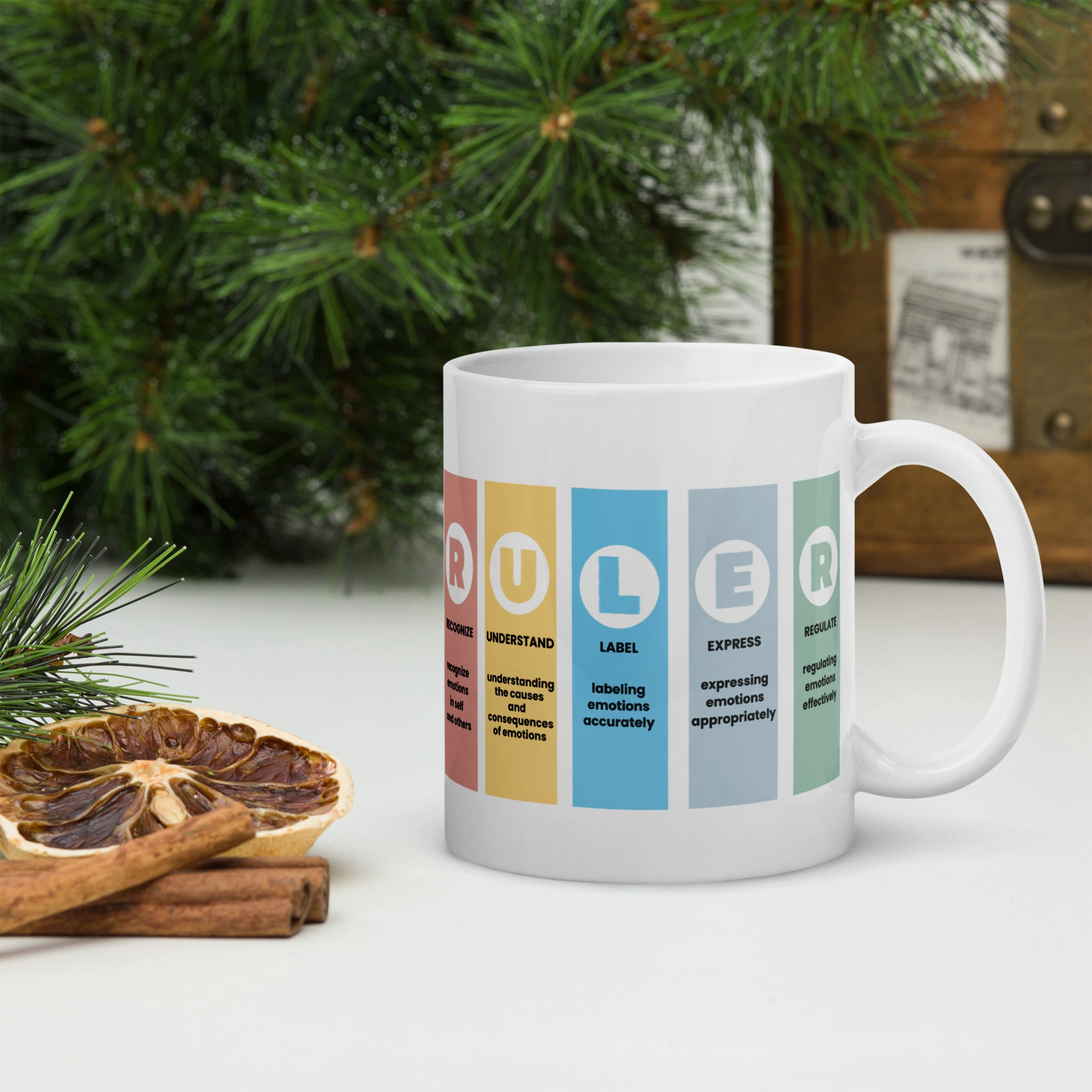
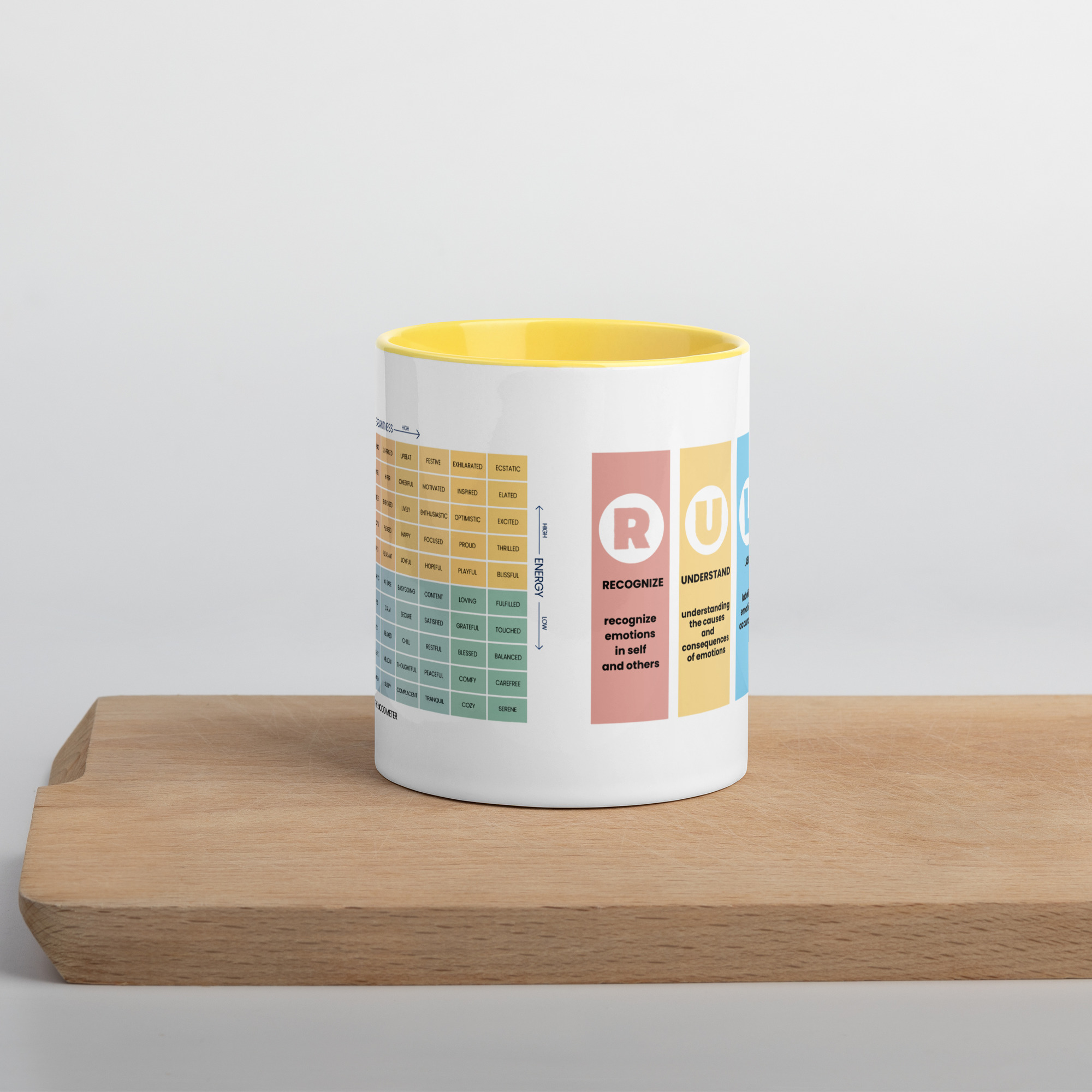
The Mood Meter & RULER White Glossy Ceramic Mug
Price range: $11.00 through $14.50 -
-
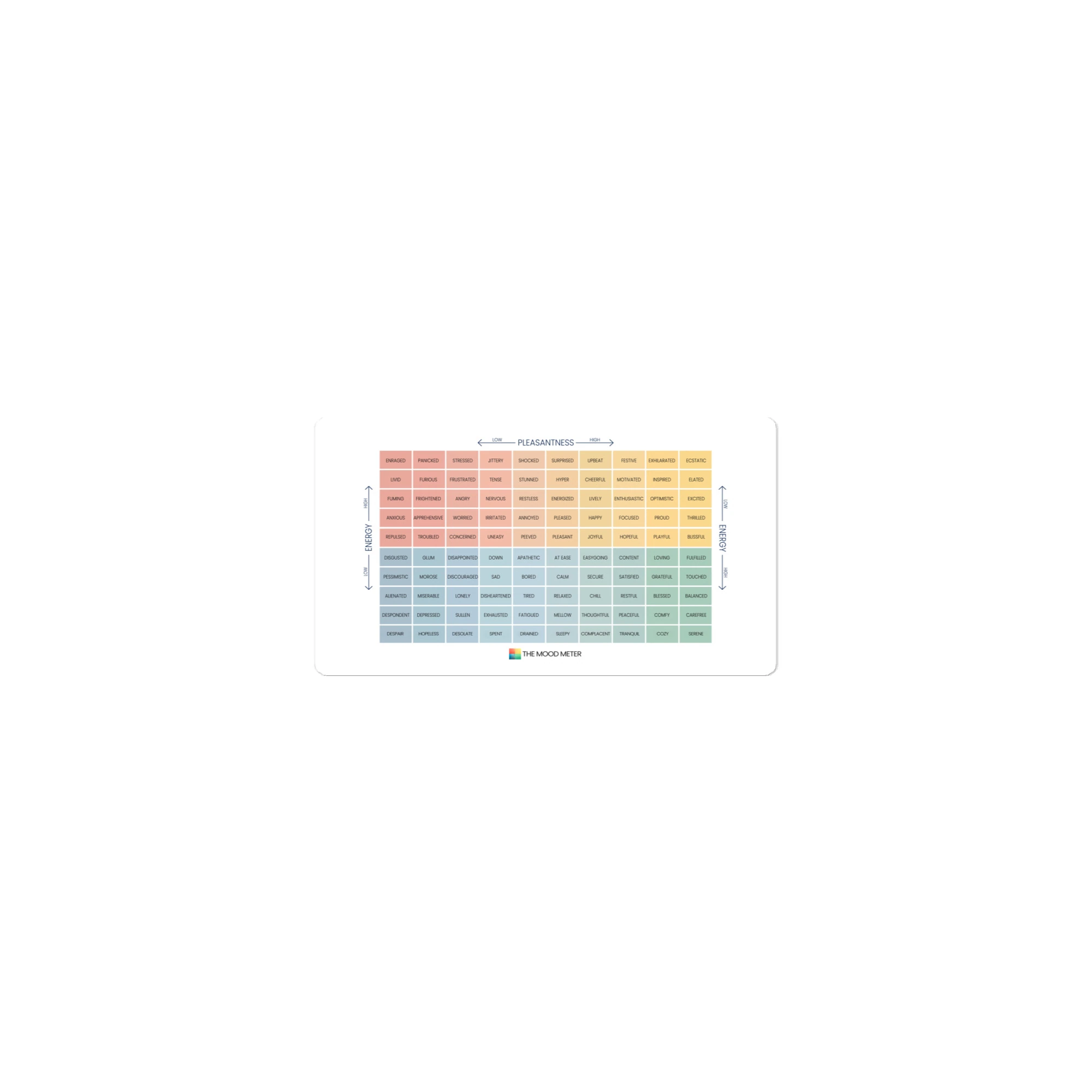
Bubble-Free Stickers – Durable High-Opacity Vinyl for Smooth Application
Price range: $7.50 through $11.00 -

-
The Mood Meter Greeting Card – Premium Paperboard with Envelope
Price range: $7.50 through $9.00